How much deposit should I take on custom furniture or cabinets?
Take 50% down before you buy materials or put the job on your schedule, and collect the rest when the piece is done. On bigger jobs, split it in three: a deposit to book it, a production payment when the build starts, and the balance at delivery or install. Put the schedule on the proposal so the client agrees to it when they sign, not in a text afterward.
Custom work is built for one person. If they walk away halfway through, you're holding a table nobody else wants at that size, in that finish. The deposit is what keeps that risk off your shop.
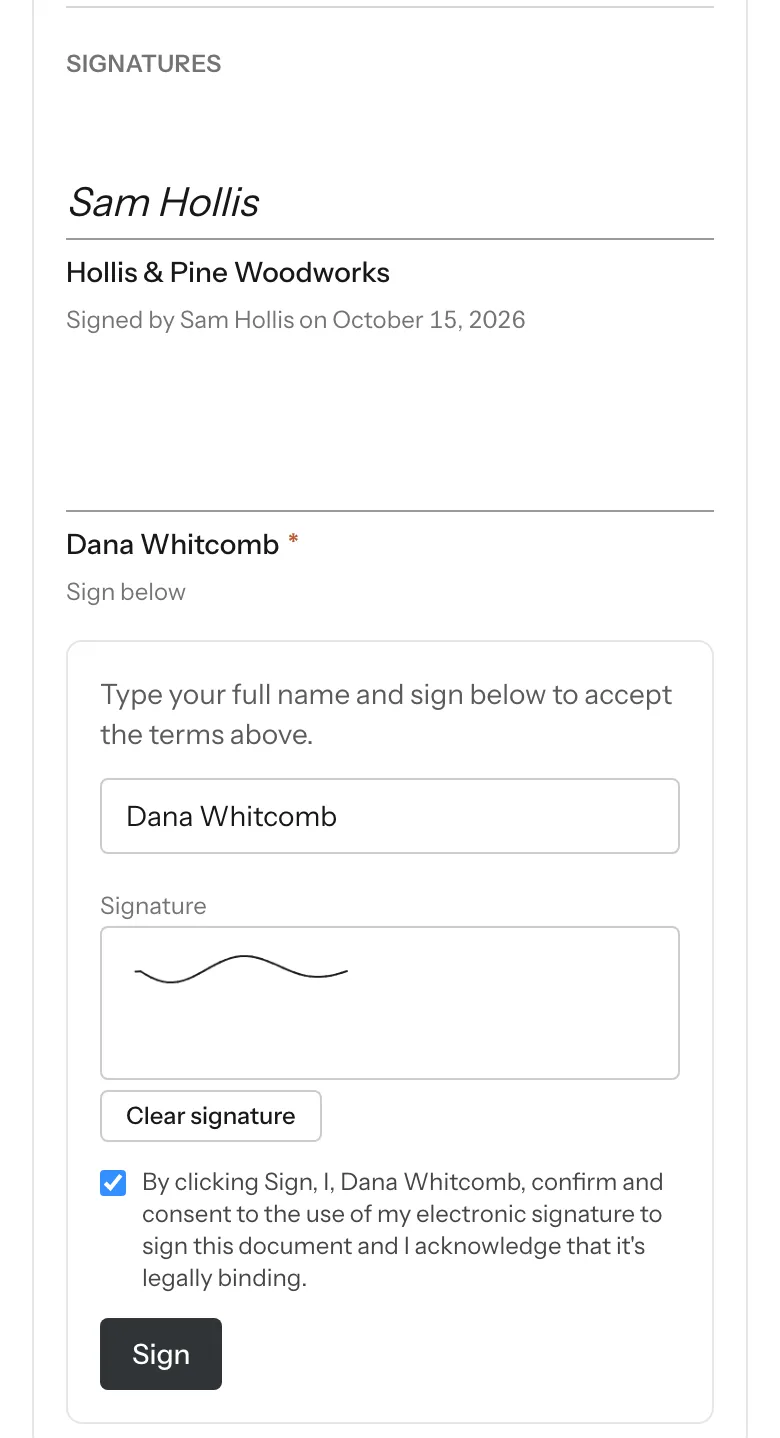
The deposit pays for their job, not your last one.
Half down covers the lumber, sheet goods and hardware for the job with room to spare, so you're never fronting a client's materials out of your own pocket. It also holds their spot. A job with no deposit is a maybe, and a maybe shouldn't push a paying client back a week.
It sorts out the serious buyers, too. Someone who balks at a deposit on a custom piece is telling you how the rest of the job will go.
One rule I'd never break: don't buy materials or cut anything until the deposit clears.
Split it in three when the job runs long.
On a kitchen, a run of built-ins or anything that takes weeks in the shop, three payments keep your cash closer to your costs:
- Deposit, when they sign. Books the job and buys the materials.
- Production payment, when the build starts. Due when you're ready to build, often right after the field measure or the final drawing is approved.
- Balance, at delivery or install. Keep it small enough that the end of the job never turns into a standoff.
Whatever split you pick, use it on every job. Same terms for everyone means you never have to negotiate it from scratch.
How to ask without it getting awkward.
It only feels awkward when it's a surprise. Put the payment schedule on the proposal next to the price, say it out loud on the call, and give the reason in one sentence. Clients who buy custom work expect it.
Make paying easy. If the deposit is one tap after they sign, most people just pay it. If it means mailing a check, it sits on the counter for a week.
Card or bank transfer? Card fees are real money on a big job, so many shops take cards but steer big payments to bank transfer or check. Before you add a card fee or set a big first payment, check the rules where you work: some states don't allow card fees, and some limit deposits on home improvement work.
The payment schedule rides on the proposal.
Every proposal has its own payment schedule: Deposit, Production Deposit and Balance Due, in dollars or a percent. New shops start at 50%, 40% and 10%, and you change that once in your estimator settings.
- Sign, then pay. The client accepts, signs on their phone, and the deposit is the next screen.
- Card or bank transfer, through your own Stripe account. Square Away's own fee on a bank transfer is 1%, capped at $150 a payment.
- Checks still count. Mark a check, cash, Venmo or Zelle payment as paid and the job stays right.
- Reminders go out in your shop's name, and the client's portal shows the next payment with a Pay now button.
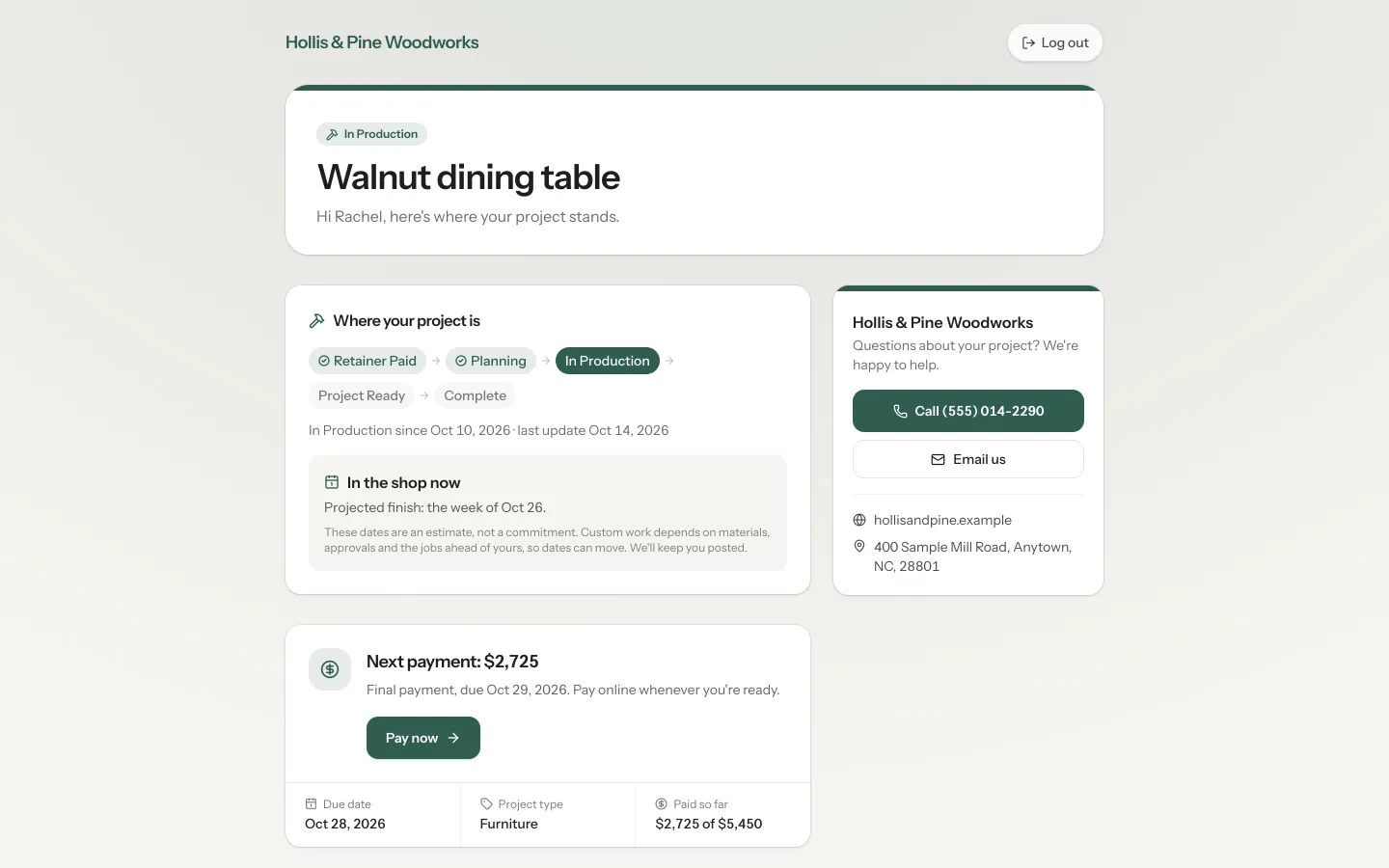
What it does, and what it leaves to you.
The split, the due dates and whether the card fee is passed on are your call, per proposal.
Where a card fee isn't allowed, that switch stays off. It goes by the state in your business address.
In California it warns when a first payment is over the state's limit. Check your own state's rules with your accountant or attorney.
It can warn a client about a late fee on an overdue payment. Square Away never adds or charges the fee.
More on deposits.
Is 50% too much to ask for a deposit on custom furniture?
No. For a one-off piece built to one client's size and finish, half down is normal, and it covers the materials you buy for them. If a client pushes back hard, offer the three-payment split instead of dropping the deposit.
When should the production payment be due?
When you're ready to start building. Many shops tie it to the field measure or the final drawing approval, so the client pays it right before the work they're paying for begins.
Should I start a job before the deposit clears?
No. Don't buy materials or cut anything until it clears. A signed proposal with no deposit is still a maybe.
Do I have to take credit cards?
No, but it helps people pay the day they sign. Bank transfer costs less on a big payment, and checks and cash still work. Some states don't let you pass the card fee to the client, so check before you add one.
Set up your payment schedule on the call.
Bring a job you're quoting now. We'll put your deposit terms on a real proposal and send it to your own phone so you see what the client sees.